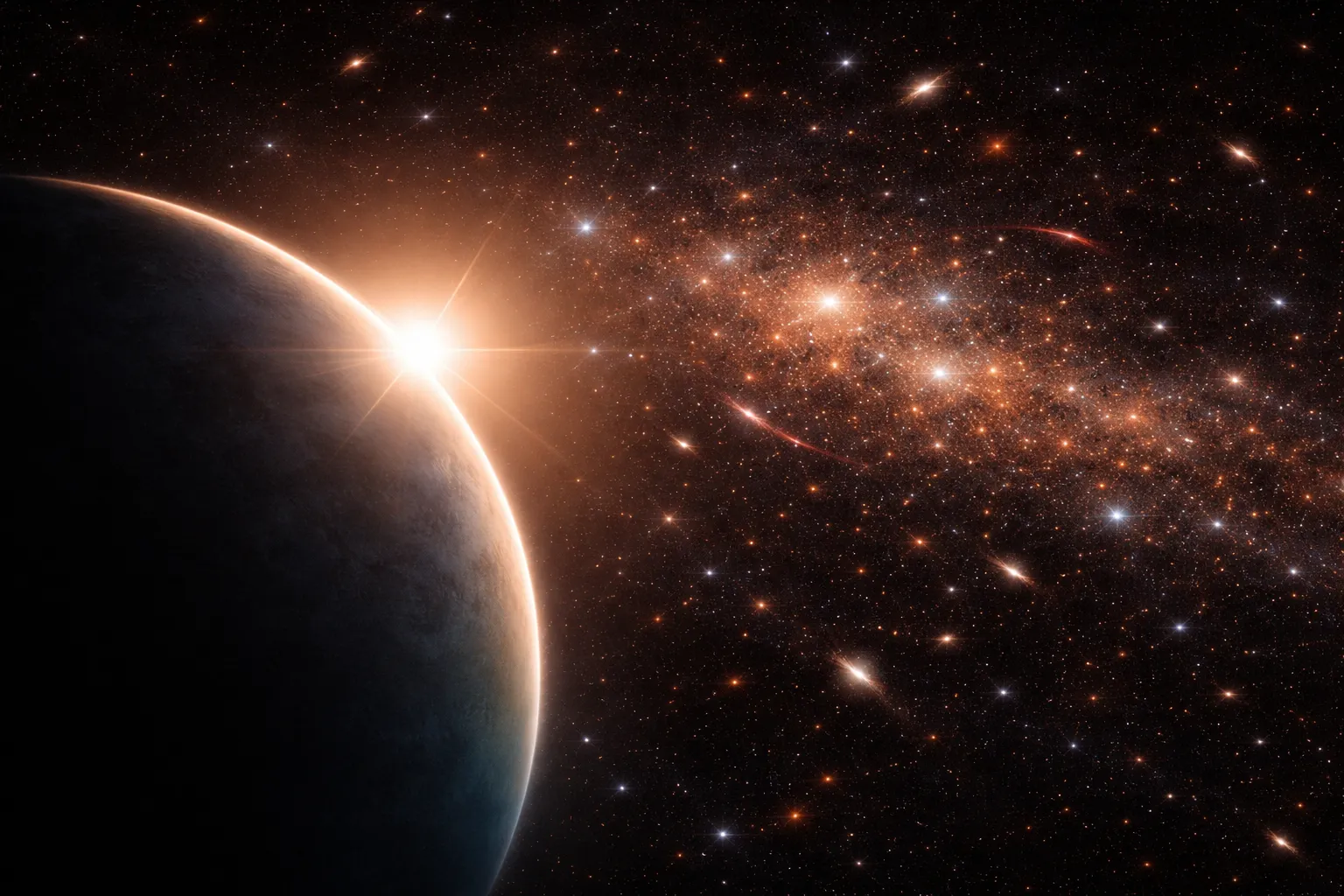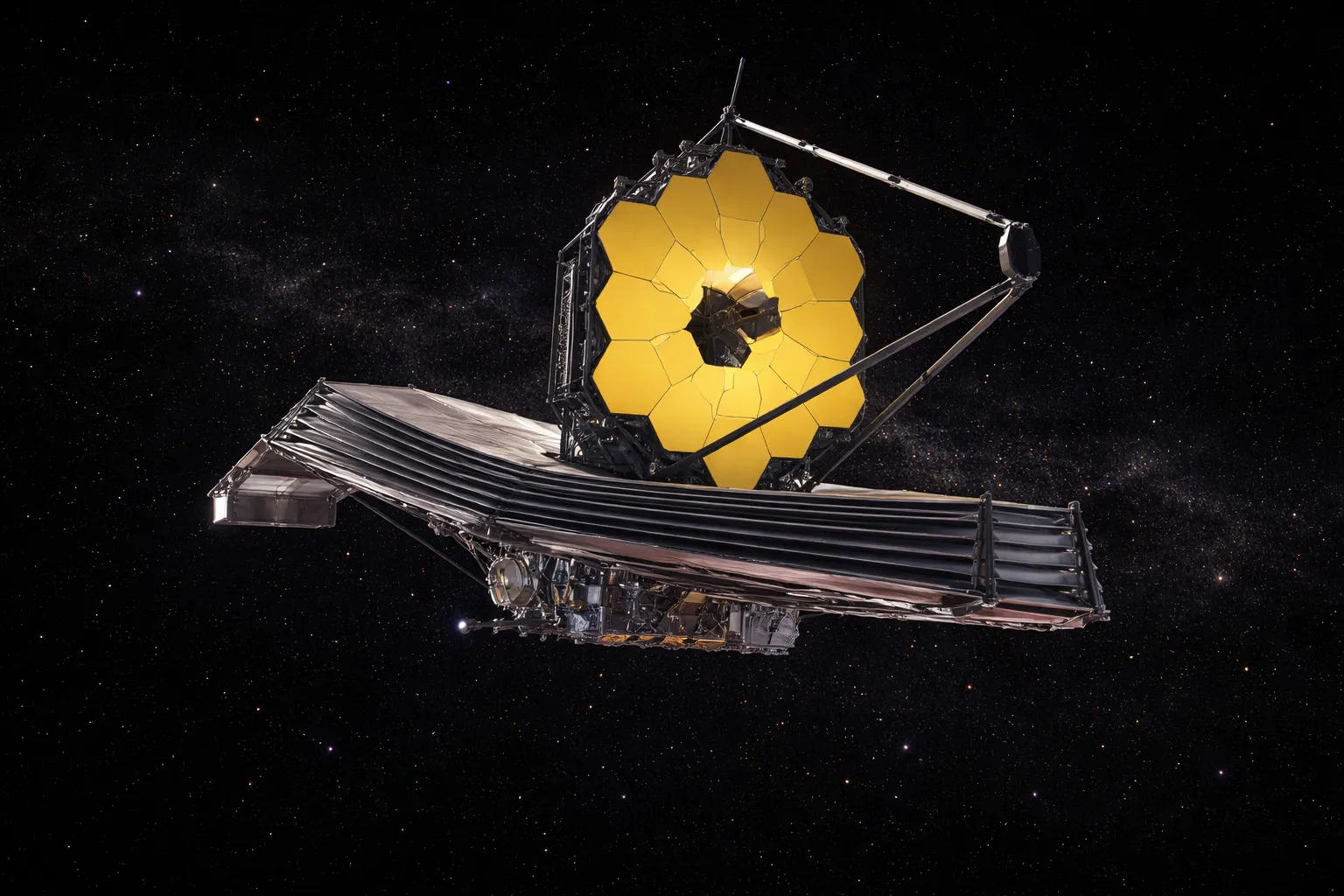
The James Webb Space Telescope produces images so beautiful that people sometimes stop at beauty and never ask the harder question: what is Webb actually looking at? The answer begins with an inconvenience. Webb does not mainly observe the universe in visible light, the narrow slice human eyes can detect. It works mostly in infrared. That makes its images look almost magical to the public, but the science is much clearer when you stop calling them magic.
Why infrared matters
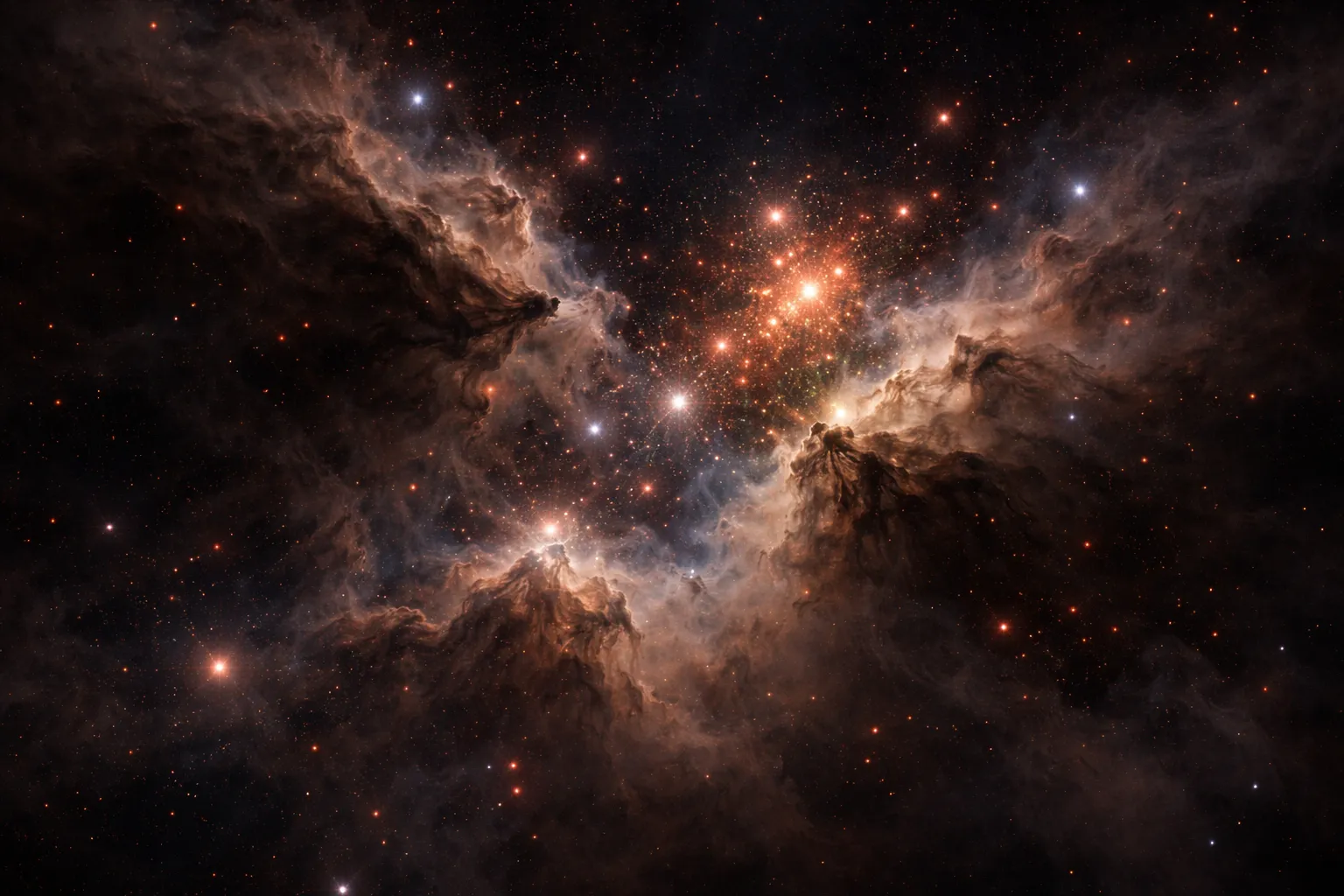
Infrared light has longer wavelengths than visible light. That gives Webb two huge advantages. First, infrared can pass through clouds of dust that block ordinary optical telescopes. Star-forming regions that look opaque in visible light become readable in infrared. Second, the expansion of the universe stretches ancient light toward longer wavelengths. Galaxies that formed very early in cosmic history can have their original visible and ultraviolet light shifted into the infrared by the time it reaches us. If you want to study the early universe seriously, infrared is not optional.
That is why Webb can do things Hubble could not do as well. Hubble changed astronomy and still matters enormously, but it was built mainly around visible and ultraviolet observations. Webb was designed to go after cooler objects, dust-shrouded structures, exoplanet atmospheres, and galaxies whose light has traveled across most of cosmic time. It is less a replacement than a different instrument aimed at different questions.
How invisible light becomes color
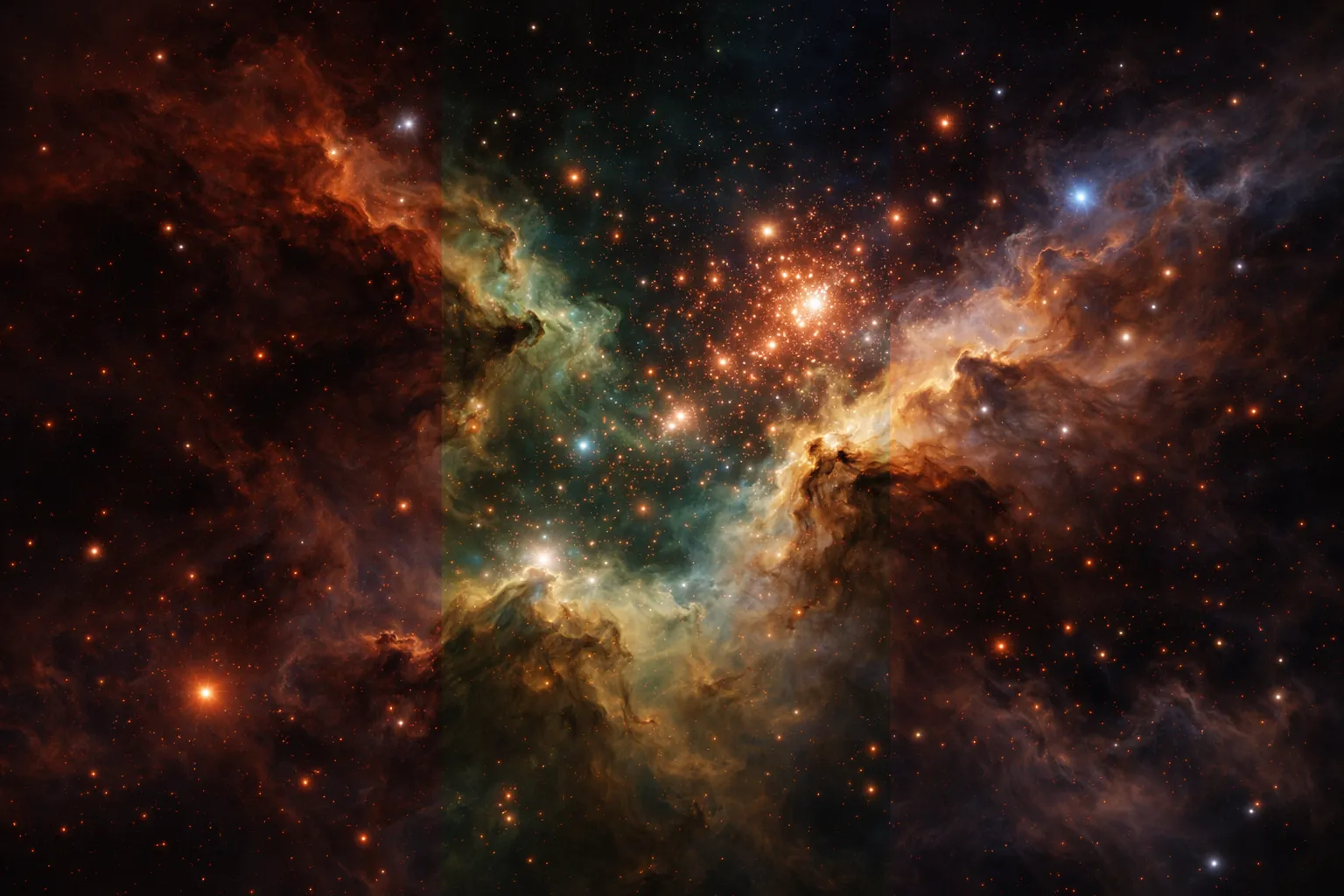
One common misunderstanding is that Webb’s images are fake because infrared is invisible. That confuses data with deception. Infrared light is real. Webb’s detectors measure it directly. Scientists then assign visible colors to different infrared wavelengths so humans can interpret structure, temperature, composition, and contrast. In other words, color in a Webb image is a translation, not a lie. It is a way of making information legible.
What the deep field really shows
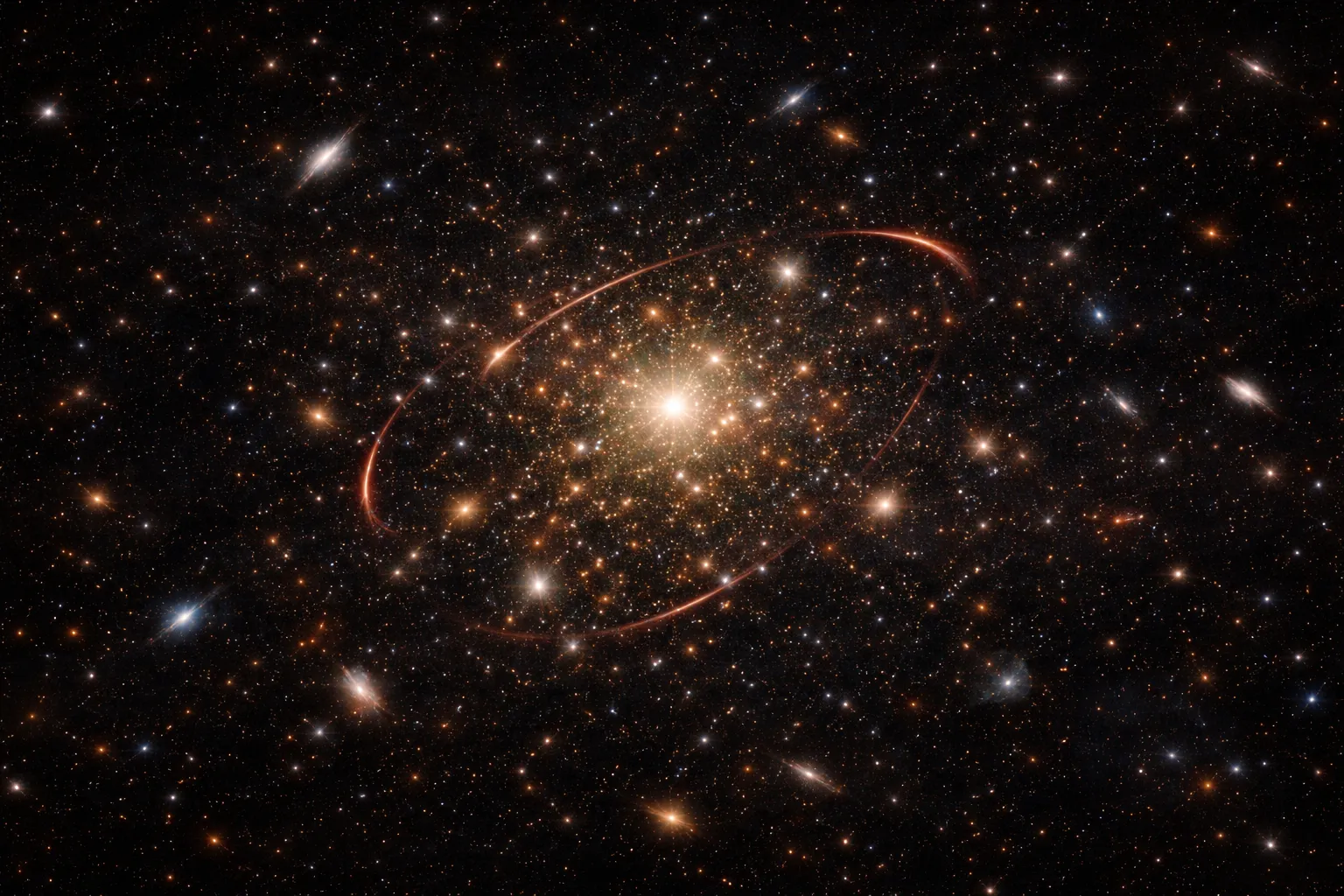
Webb’s first deep field became famous because it looked crowded, intricate, and almost unreal. In fact, it was painfully real. The image centered on the galaxy cluster SMACS 0723 and used the cluster’s gravity as a lens, magnifying still more distant objects behind it. Many of the tiny reddish arcs in that image are distorted background galaxies whose light has traveled for billions of years. Some of the objects Webb detects in these deep observations are seen at distances of roughly 13.4 billion light-years. That does not mean Webb is simply looking across ordinary space. It means it is detecting light that has been on the move since very early in cosmic history.
This is where the emotional power of Webb actually comes from. You are not looking at a pretty wallpaper of stars. You are looking at time delayed by distance and made visible by engineering. The farther away the source, the older the light. Webb turns that into a method: observe early galaxies, compare their shapes and chemistry, and ask how structure formed so soon after the Big Bang.
What scientists are searching for
Webb is not just trying to break distance records. Astronomers use it to study how the first stars and galaxies assembled, how black holes grew in the young universe, how planetary systems form inside dust-rich disks, and what exoplanet atmospheres contain. When Webb takes a spectrum of a distant world, scientists can search for water vapor, carbon dioxide, methane, and other molecules. When it studies star-forming regions, it reveals where gas is collapsing and how newborn systems emerge from dust.
So what does James Webb actually see? It sees infrared light from a universe that is older, dustier, colder, and more distant than our eyes alone can handle. Then teams of engineers and scientists turn that light into images and measurements we can use. The result can be beautiful, but beauty is the side effect. The real achievement is that Webb makes invisible history readable.