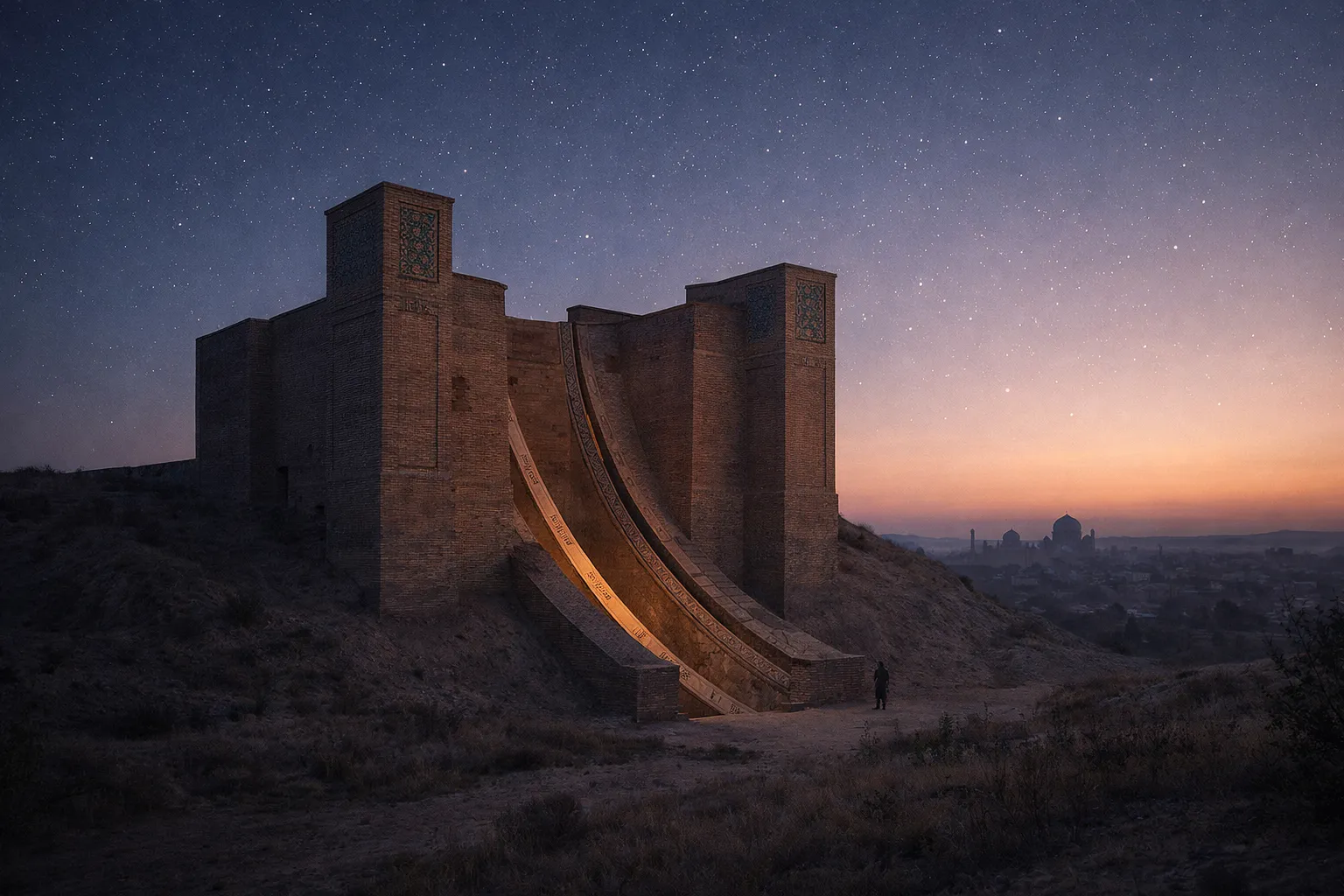
There are ruins outside Samarkand that do not look like the center of a scientific revolution. They are quiet, partial, and easy to pass without understanding what once stood there. But in the fifteenth century, this was one of the most advanced observatories on Earth. Its patron was Ulugh Beg: Timurid prince, ruler, mathematician, and one of the rare people in political history who seems to have trusted numbers more than flattery.
Ulugh Beg was born in 1394, the grandson of Timur, into a world where power usually announced itself through conquest, architecture, and dynasty. He did not reject those things, but he added something rarer: sustained scientific work. At his court, scholarship was not decoration. Astronomy and mathematics were taken seriously as disciplines that required method, patience, and institutional support. That alone makes him unusual. What makes him historic is what that seriousness produced.
A ruler who built for precision
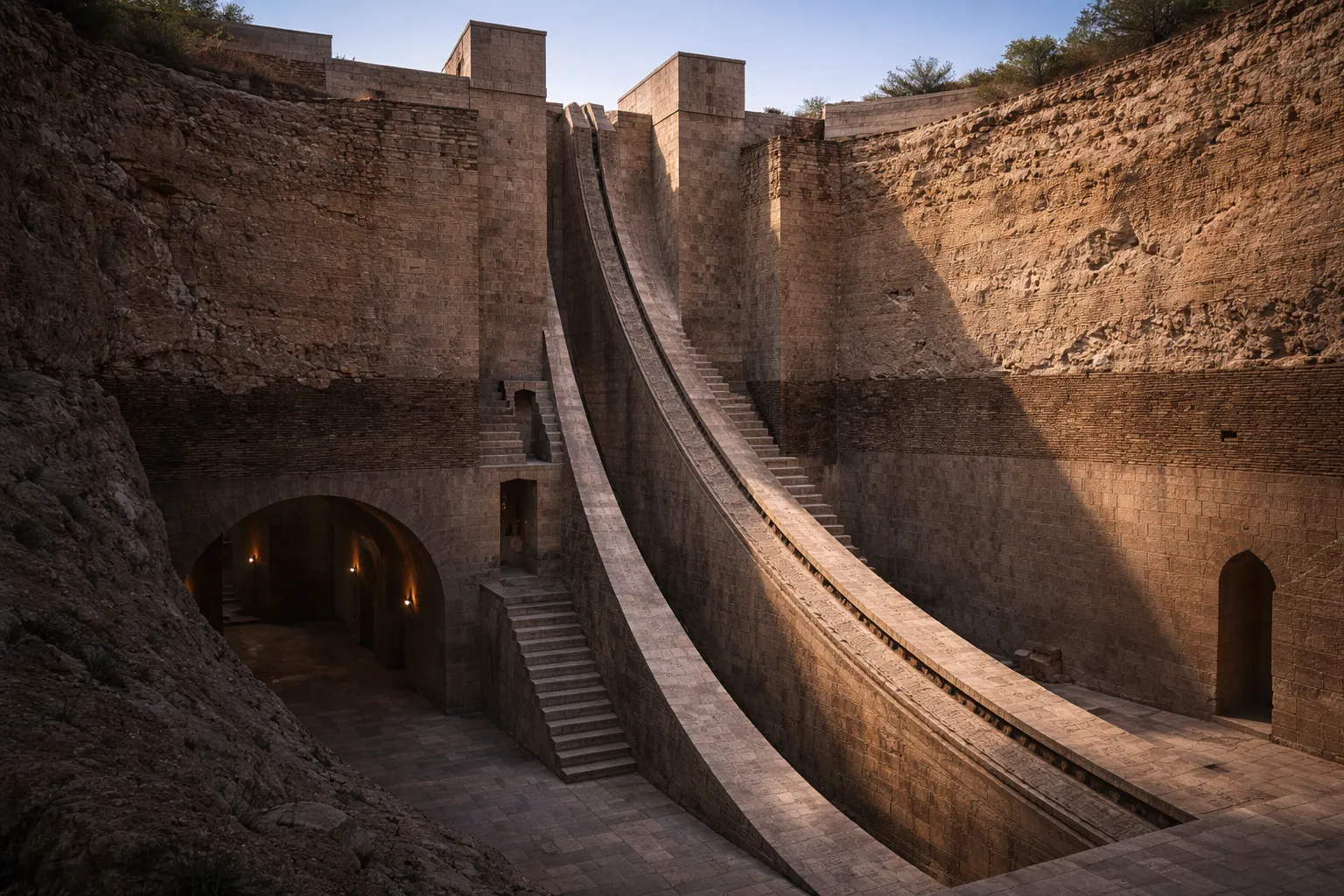
In 1424, construction began on the Samarkand Observatory. It was not built around a telescope; telescopes did not yet exist. It was built around geometry, angle measurement, and the disciplined repetition of observation. Its most famous instrument was a vast meridian arc, often described as a sextant, about 40 meters in radius and cut directly into the hillside. The scale mattered. Bigger instruments made finer measurements possible, and finer measurements were the difference between tradition and science.
This was astronomy before photography, before digital clocks, before modern optics. Every useful result had to be earned by coordination between people, instruments, calculation, and weather. That Samarkand could operate at this level in the early fifteenth century should be taught far more often than it is. The observatory was not an isolated curiosity in Central Asia. It was one of the high points of pre-modern exact science.
The catalogue that outlived its century
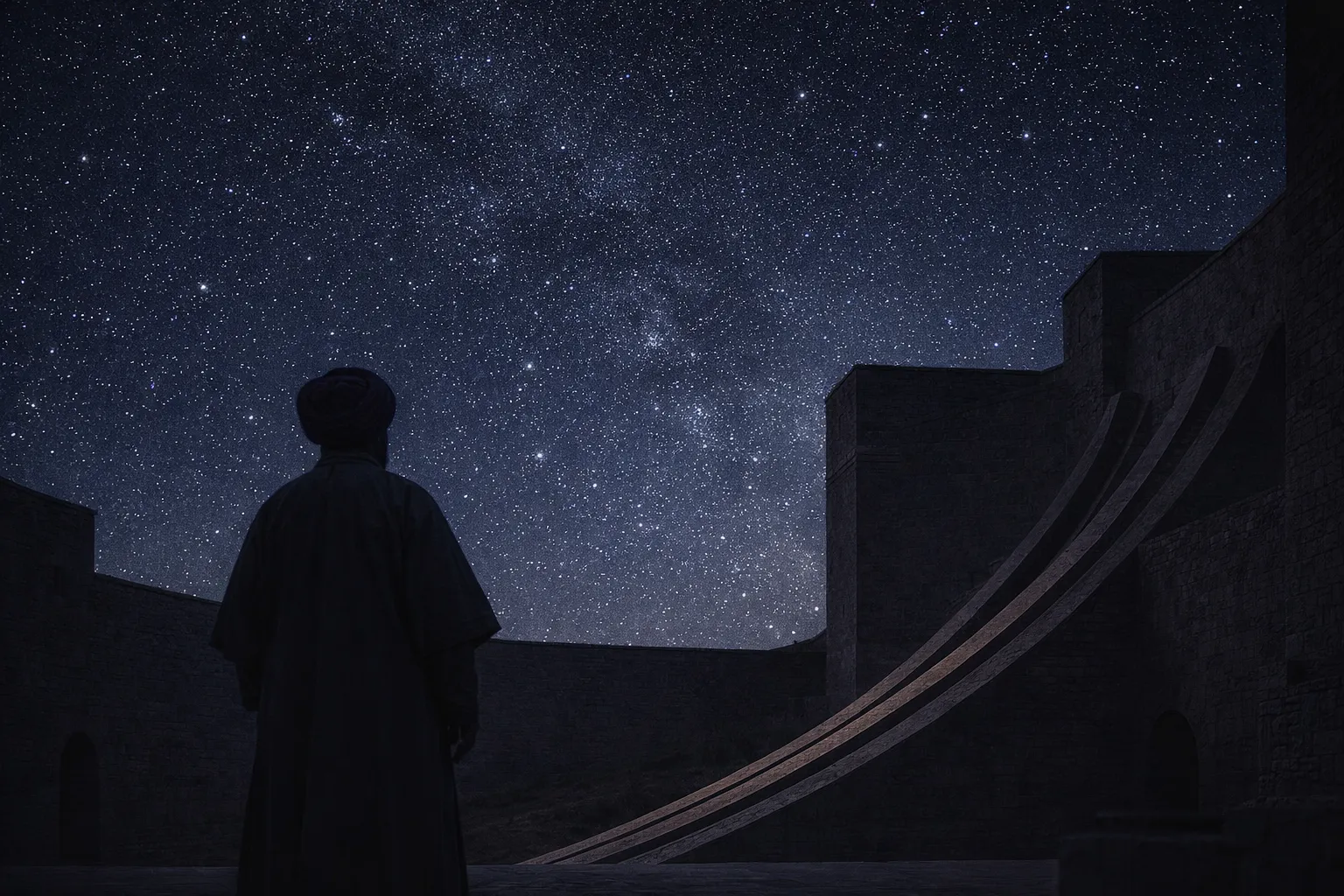
The best-known result of Ulugh Beg’s observatory was the Zij-i Sultani, a star catalogue and set of astronomical tables that listed 1,018 stars. Its accuracy was extraordinary: around one arcminute in many cases, better than anything available in Europe at the time. This was not folklore, and it was not court propaganda. It was observational work of a standard that later astronomers could actually use.
That matters because astronomy is cumulative. A measurement made carefully in one century becomes the floor on which another century stands. By the sixteenth century, the Samarkand data had traveled west through manuscript and scholarly transmission. Tycho Brahe, the great Danish observer before Kepler, respected its quality. More broadly, European astronomy entered the Copernican period in a world where high-precision observation had already been advanced by scholars working far beyond Europe. Samarkand was part of that story, whether later textbooks made room for it or not.

A brilliant life with a brutal ending
The story does not end like a triumph. Ulugh Beg’s political position weakened, and in 1449 he was killed on the orders of his own son, Abd al-Latif. It is one of those historical facts that feels too literary to be true until you realize history is often less merciful than fiction. After his death, the observatory declined and was eventually destroyed. For centuries, what had happened there survived more securely in texts than in stone.
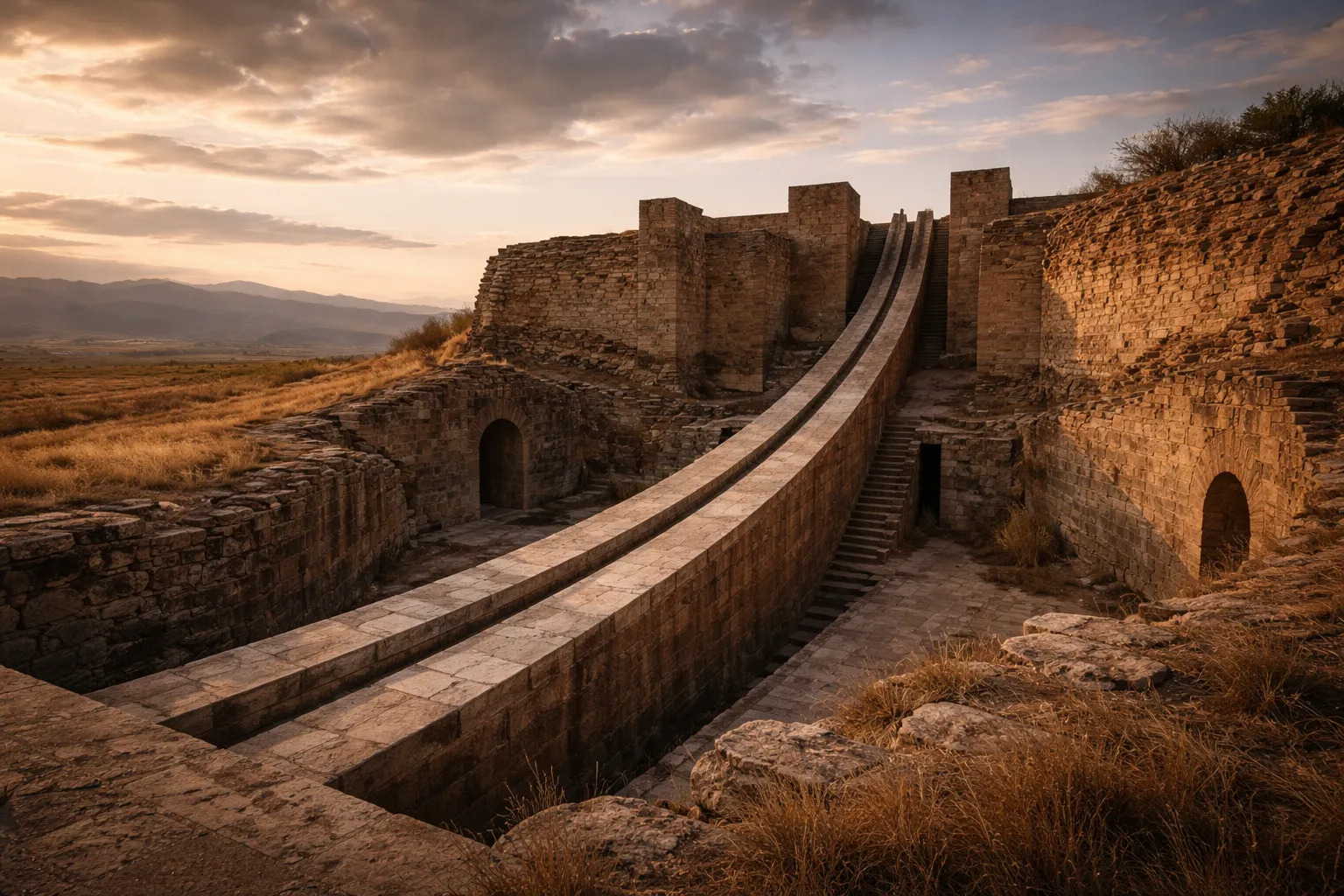
The ruins were identified again only much later, and today they stand outside Samarkand as physical proof that scientific ambition once took monumental form here. You can still visit the site. You can still see the surviving channel of the great arc. What you feel there is not only pride. It is also a little anger that this inheritance is so often mentioned as a side note, when it should be one of the first things Uzbek students learn about the history of science.
Why this matters in Uzbekistan now
AELVOX exists partly because of that gap between inheritance and access. Uzbekistan has astronomical history strong enough to command global respect, but very little modern astronomy writing exists online in Uzbek. That contradiction is not small. It shapes who gets invited into science and who is left to admire it from a distance. Remembering Ulugh Beg properly is not nostalgia. It is a way of refusing the idea that serious astronomy belongs somewhere else.
Samarkand’s observatory did not change astronomy because it was beautiful, though it was. It changed astronomy because it measured carefully, recorded honestly, and aimed for a precision that later generations could test. That is still the standard. And for a student in Uzbekistan today, it should feel less like distant history than like unfinished business.