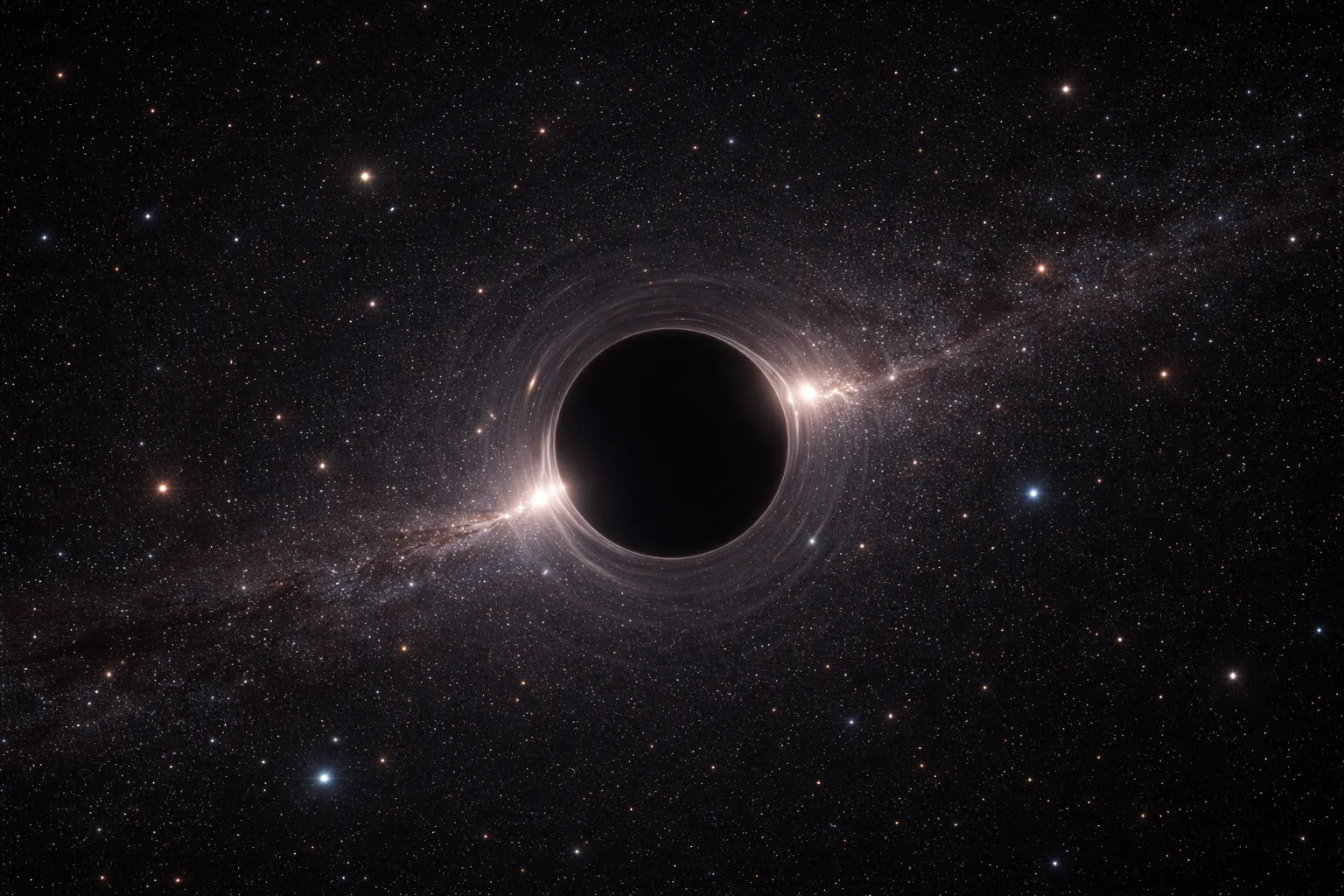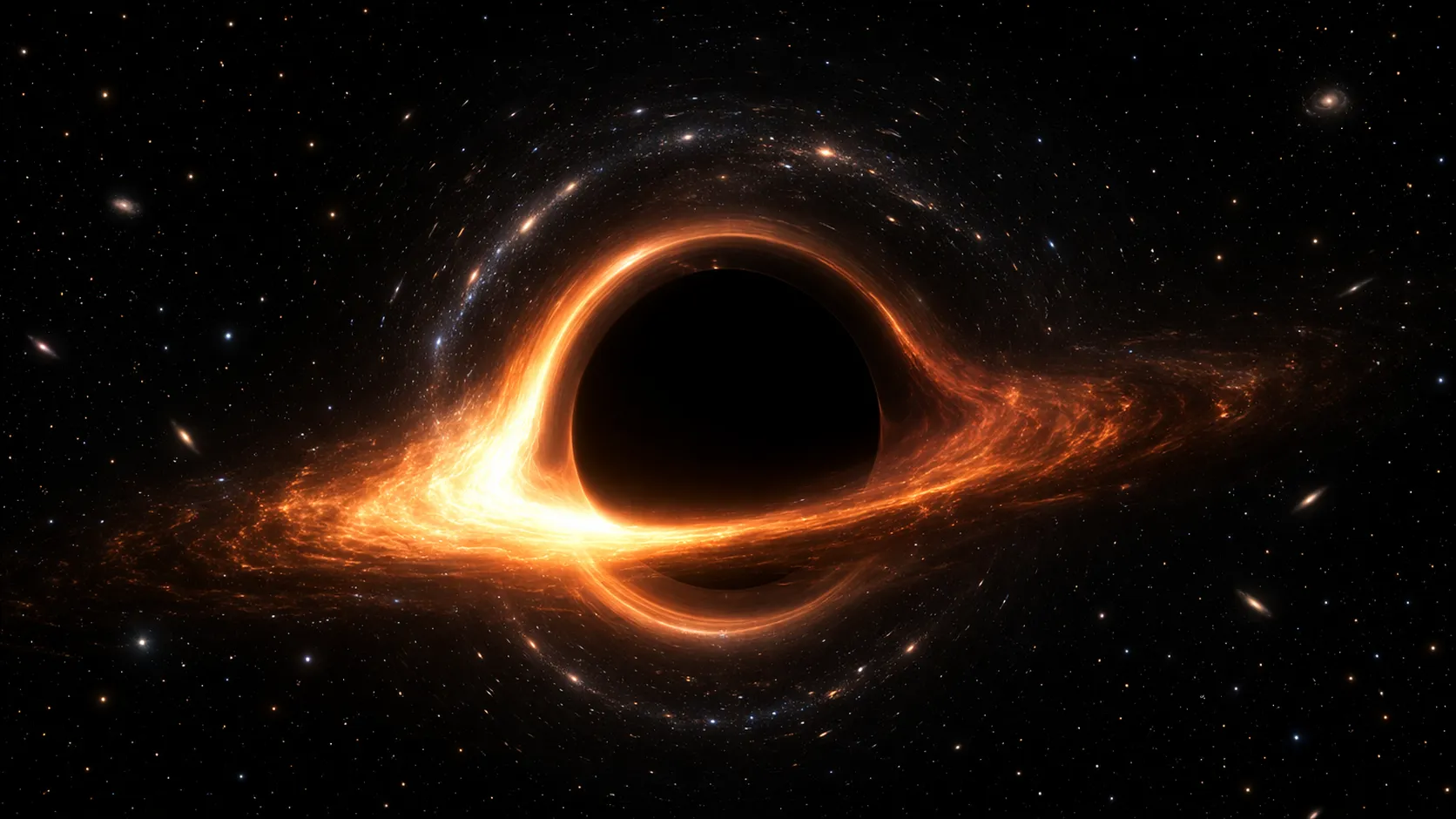
The idea sounds like science fiction because it attacks a basic assumption most people never think to question: that time passes at the same rate everywhere. Einstein showed that it does not. According to general relativity, gravity is not just a force pulling on matter. It is a change in the geometry of spacetime itself, and one consequence of that geometry is that clocks run at different rates in different gravitational environments. Near stronger gravity, time passes more slowly.
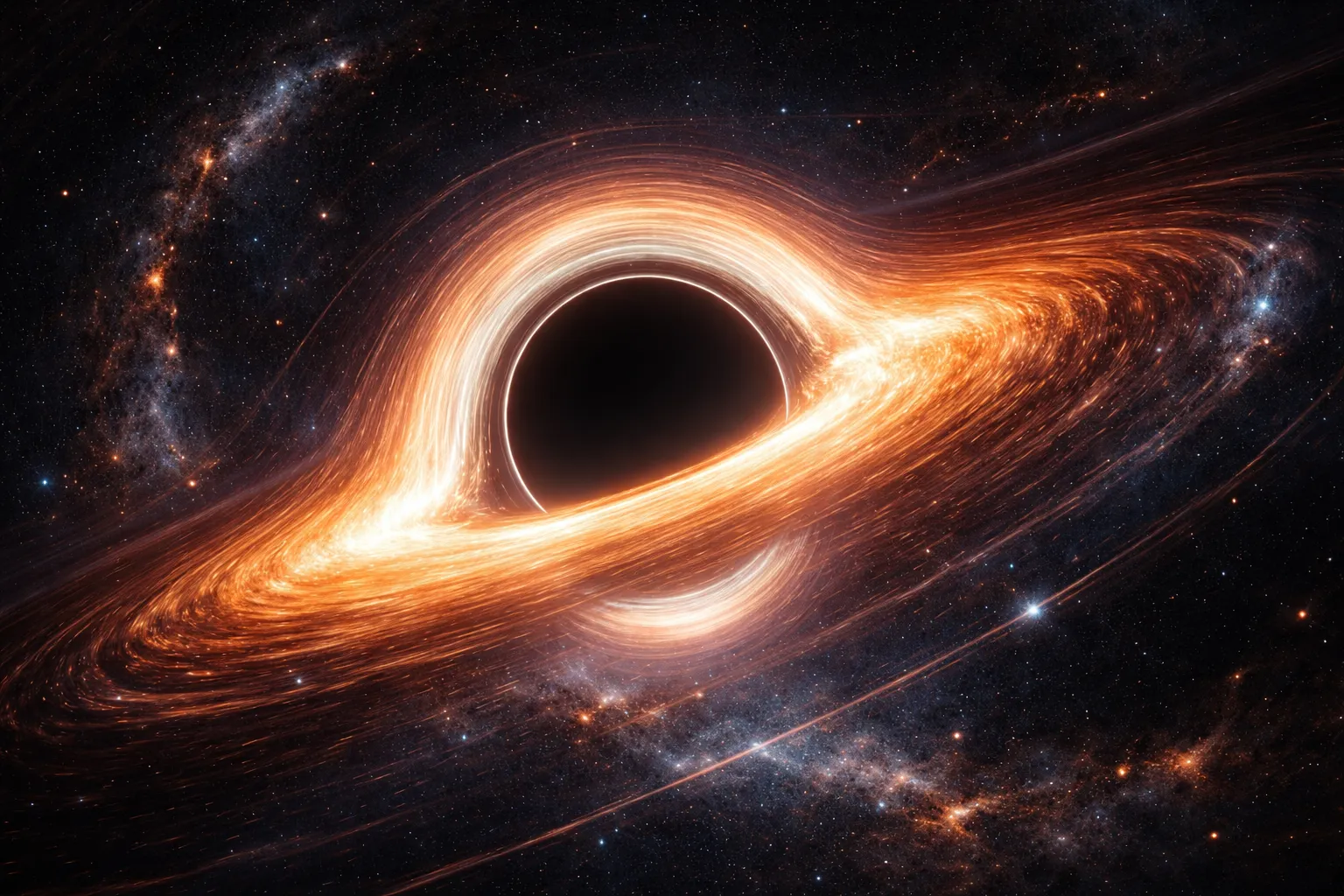
Einstein’s prediction without the equations
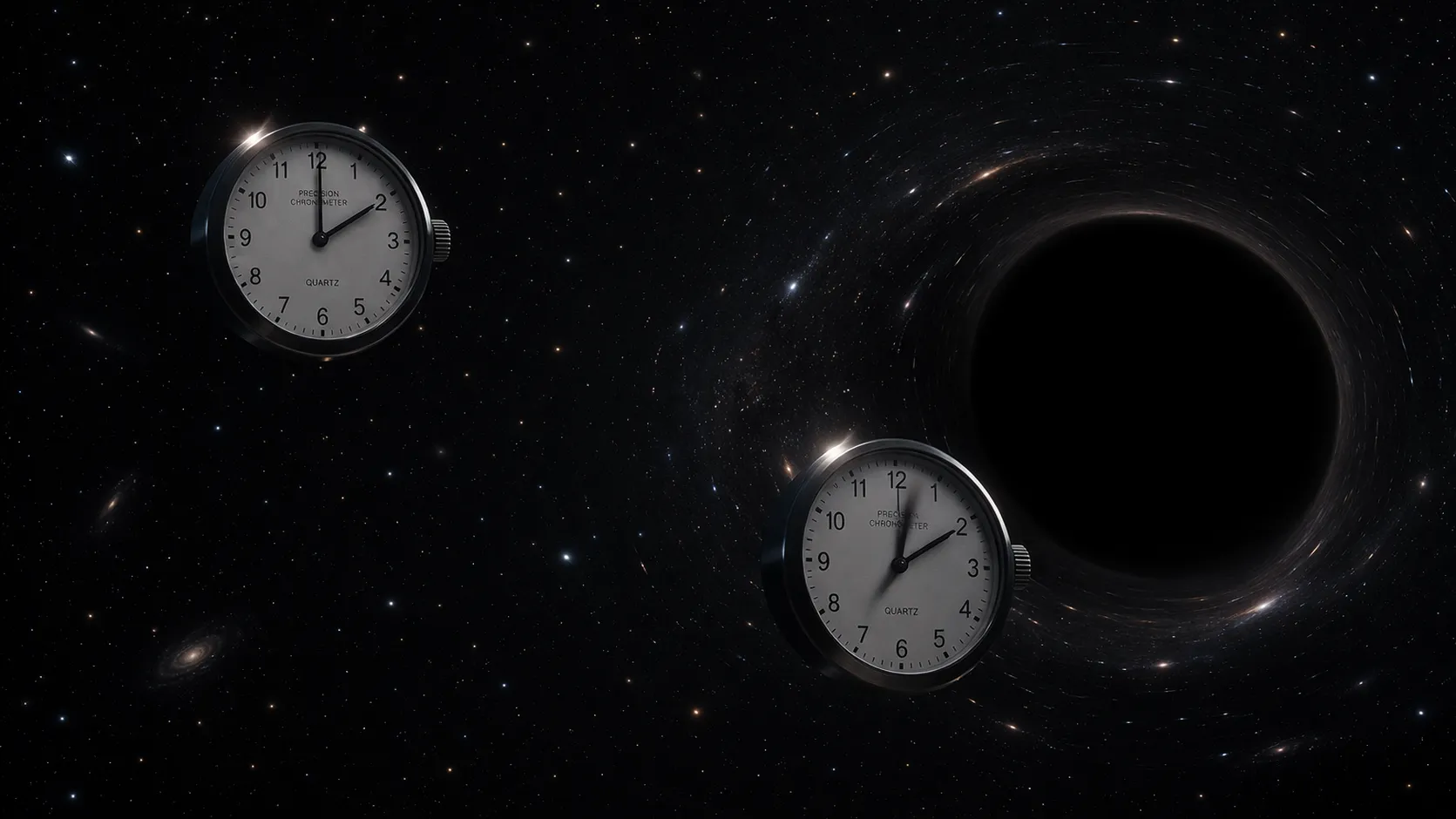
A good way to picture this is to stop imagining time as a universal background and start imagining clocks as physical processes. A clock can be a pendulum, a quartz crystal, an atom, or even the repeated movement of light inside an instrument. If spacetime changes, the rhythm of those processes changes too. A clock deeper inside a gravitational well records fewer seconds than one farther away. Nothing looks broken locally. Each clock still appears normal to the person standing beside it. The difference appears when you compare them.
This is why the twin paradox is useful even when it gets simplified badly online. One twin travels through extreme conditions and returns younger than the one who stayed behind. In the special-relativity version, motion does the work. In the gravitational version, gravity does. The deeper you are in a gravitational well, the slower your clock runs relative to a clock farther out. A black hole is only the most dramatic version of the same rule.
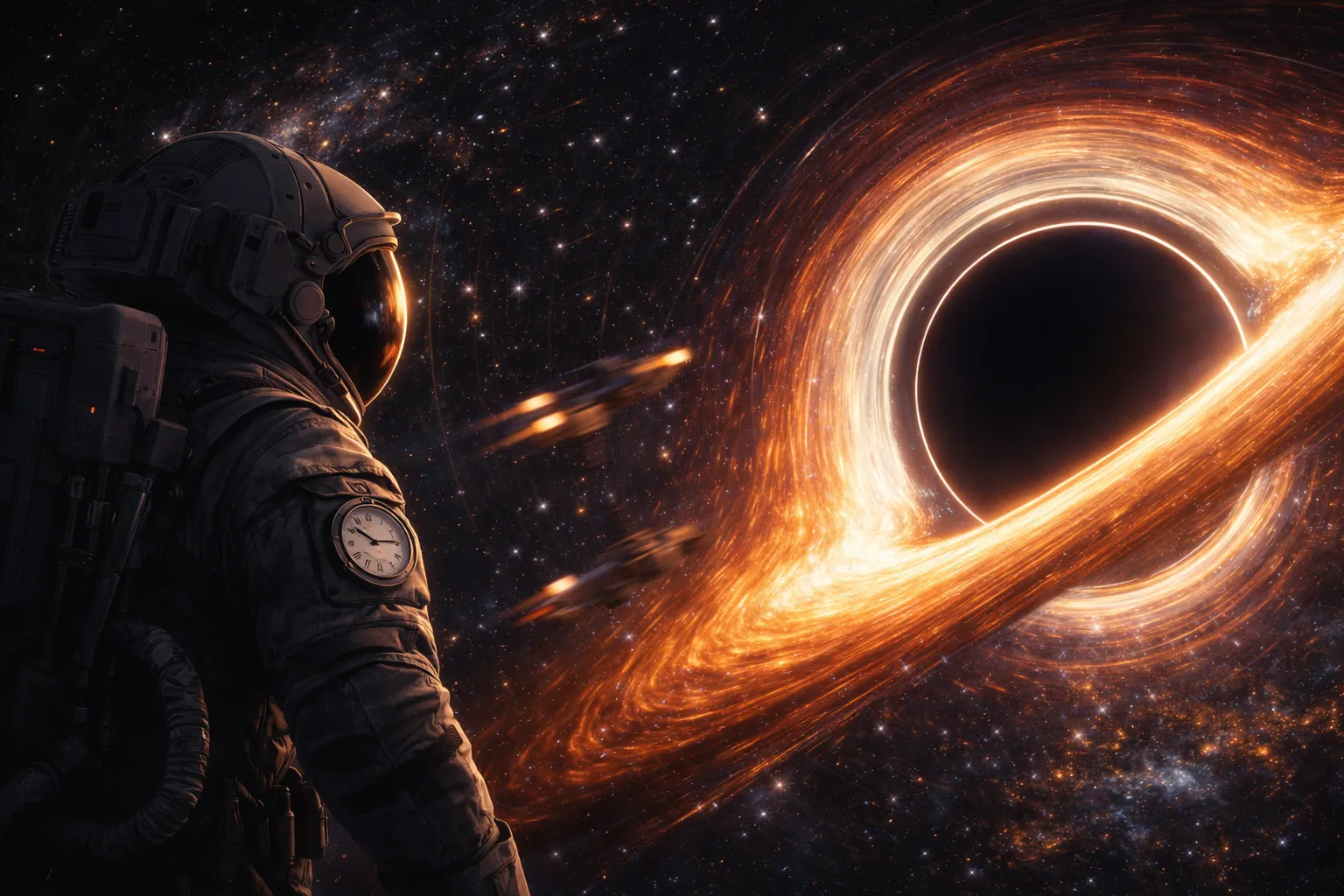
Why your phone already depends on relativity
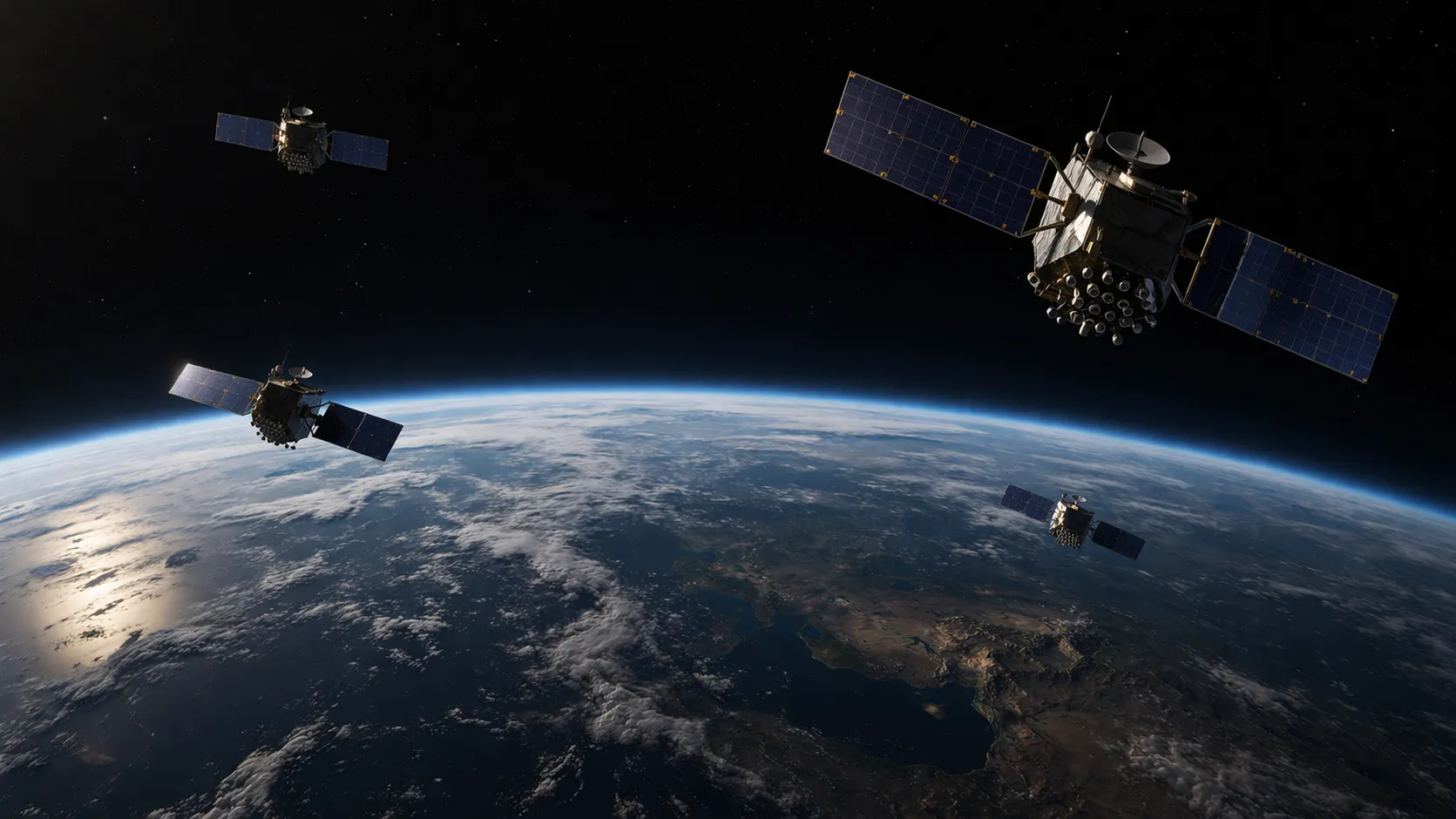
Gravitational time dilation is not a black-hole-only party trick. GPS satellites orbit high above Earth where gravity is weaker than it is on the ground. Their onboard clocks do not tick at exactly the same rate as clocks on Earth. If engineers ignored that difference, location errors would build quickly and your maps would become useless. Relativity has to be corrected for continuously. That is one of the best ways to understand the subject: not as a distant theory, but as an everyday engineering requirement.
What the 2021 white dwarf result showed
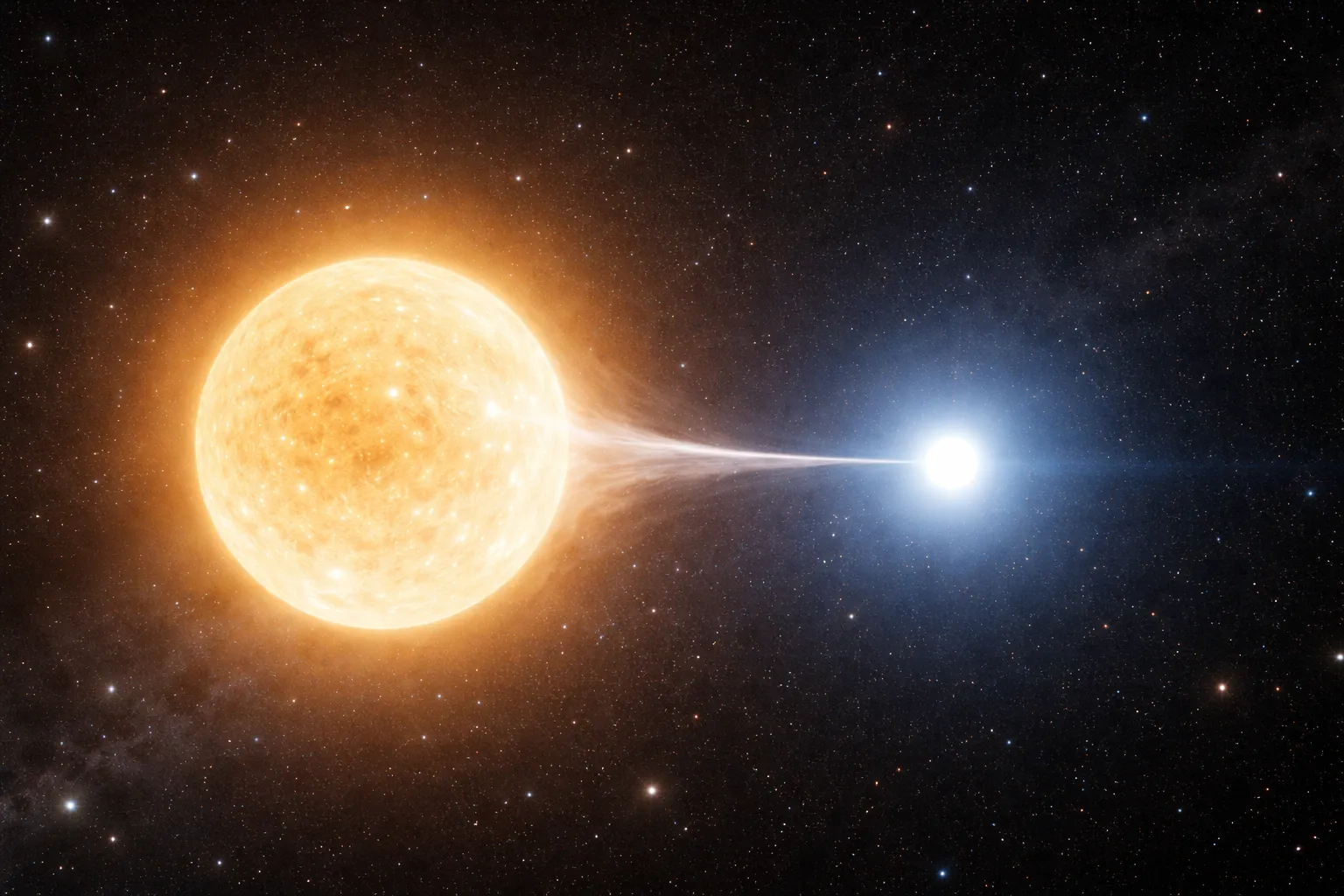
The effect has also been tested in stronger astrophysical settings. In 2021, astronomers reported a clean measurement of gravitational redshift in a white dwarf and its companion star. A white dwarf is not a black hole, but it packs stellar mass into a very compact object, which means gravity at its surface is intense. The result matched the predictions of relativity again. That matters because it closes the psychological gap between theory and reality. The universe keeps doing what Einstein said it would do.
The reason astronomers like white dwarfs in this conversation is that they are easier to study directly than black holes. Black holes announce themselves mostly through the effects they have on nearby matter and light. White dwarfs let us measure strong-gravity behavior in systems where the source is still visible. They are like training grounds for thinking clearly before you move to the most extreme cases.
Why black holes make the effect impossible to ignore
Near a black hole, spacetime is curved so severely that the difference in clock rates becomes extreme. To a distant observer, signals from a clock near the event horizon arrive stretched out and slowed down. To the person near the black hole, their own time still feels normal. That is the part people often miss: time dilation is about comparison, not about feeling yourself slow down. The weirdness appears when observers in different gravitational environments compare notes.
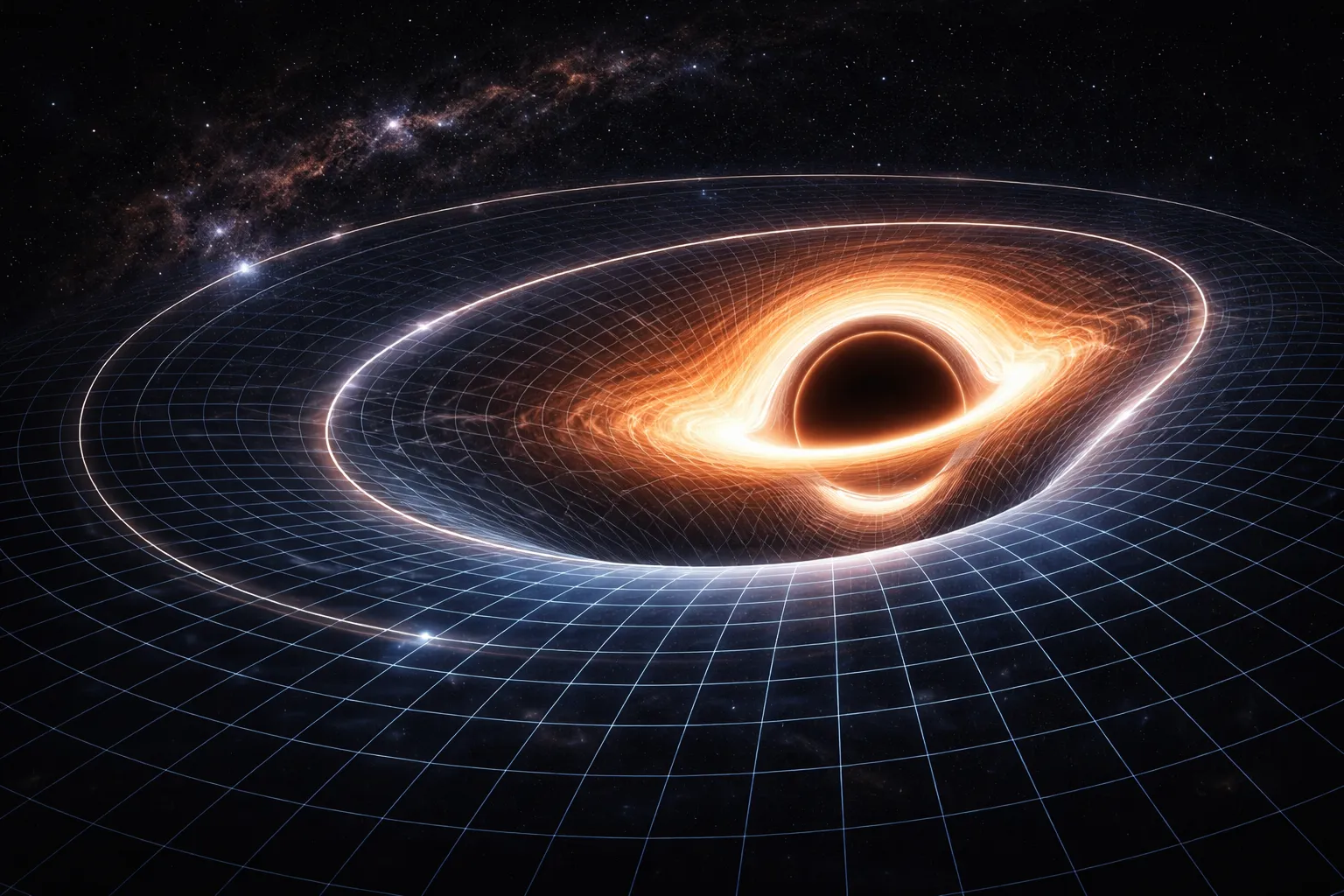
So why does time slow near a black hole? Because gravity is not merely a pull through space. It is a change in the structure of reality that tells matter, light, and clocks how to behave. That statement sounds extravagant until you remember that your navigation apps, astronomical measurements, and some of the cleanest tests in modern physics already rely on it. Black holes just take the same truth and turn the volume all the way up.